
Cybersecurity Assessment vs Penetration Test vs Vulnerability Scan
Published:
These services are related, but they are not interchangeable.
A vulnerability scan finds known weaknesses. A penetration test attempts controlled exploitation. A cybersecurity assessment evaluates how weaknesses, control gaps, and operational realities combine into business exposure, priorities, and next decisions.
The right question is not which one is best. The right question is which decision you are trying to support.
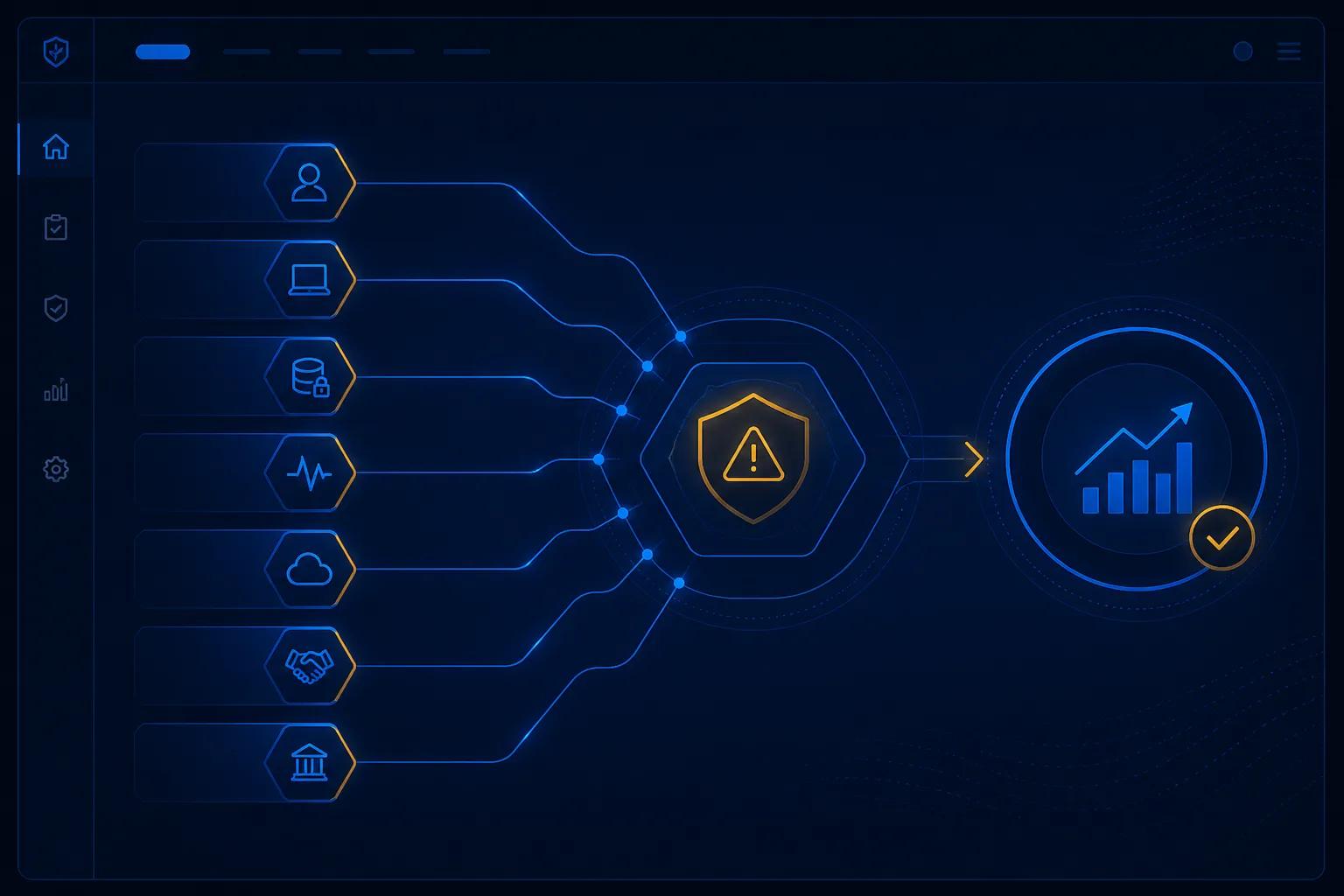
Verizon’s 2026 DBIR found that exploitation of vulnerabilities accounted for 31% of breaches, while credential abuse accounted for 13%. Those findings help explain why scans and penetration tests answer narrower questions about known weaknesses or exploitability, while an assessment is needed when leadership must understand broader business exposure, priorities, and next actions.
Why buyers confuse these services
The confusion is understandable because all three services deal with security weakness. From the outside, they can sound like different names for “checking our environment.” The difference is not just methodology. It is the decision each service is meant to support.
A buyer under pressure may ask for a penetration test when the real problem is poor visibility. Another may request a scan when what leadership actually needs is prioritization. That is why the right starting point is usually not “which security service sounds strongest?” but “what question are we trying to answer?”

What a vulnerability scan does
A vulnerability scan is designed to identify known weaknesses across systems, devices, and applications. It is fast, repeatable, and useful for hygiene.
It helps answer questions like:
- Which known vulnerabilities are present?
- Which systems are missing patches?
- Where are obvious technical weaknesses accumulating?
What it does not do well is explain broader business impact, governance weakness, or whether the organization is prioritizing risk correctly.
That does not make scans unimportant. In many environments they are essential. But they are designed to surface technical findings at scale, not to interpret the full business meaning of those findings. A scan can tell you that weaknesses exist. It usually cannot tell leadership which one matters most in context, what can wait, or how multiple weaknesses combine into a larger exposure picture.
What a penetration test does
A penetration test simulates adversarial behavior within a defined scope. It is useful for understanding exploitability and demonstrating how a weakness might be chained into something larger.
It helps answer questions like:
- Can this weakness actually be exploited?
- How far could an attacker move from a defined starting point?
- Which controls fail under realistic attack conditions?
What it does not replace is a broader view of technology risk, prioritization, and executive decision-making.
Penetration testing is often the right tool when the organization already knows the environment it wants to challenge and needs proof of exploitability. It becomes a weaker fit when the main problem is not “can this path be exploited?” but “do we understand the broader risk picture well enough to decide what to do first?”
What a cybersecurity assessment does
A cybersecurity assessment looks across the environment and asks a wider question:
Where is the business actually exposed, how serious is it, and what should be addressed first?
It evaluates areas such as:
- identity and access design
- endpoint and device security
- backup and recovery dependencies
- monitoring and response readiness
- cloud and SaaS exposure
- governance, ownership, and policy discipline

This is why assessments are often the best starting point for leadership. They translate technical weakness into business impact and priority.
They also help resolve the gap between what IT sees and what leadership needs. IT may know there are too many privileged accounts, weak backup security, thin monitoring discipline, or inconsistent SaaS governance. Leadership needs to know how those conditions affect exposure, what deserves action now, and where funding or ownership decisions should land.
When each is most useful
Use a vulnerability scan when you need broad technical discovery and recurring hygiene.
Use a penetration test when you need controlled validation of exploitability in a defined scope.
Use a cybersecurity assessment when you need to understand the full exposure picture and make better decisions about what matters most.
In many mature environments, all three have a place. But they do different jobs.
One practical way to think about it is this:
- a scan tells you what known technical weakness exists
- a penetration test shows whether a weakness can be exploited in a meaningful way
- an assessment helps leadership understand what the wider exposure means and what should happen next
Common decision mistakes
Organizations often choose the wrong starting point when:
- they request a pen test before they have a clear exposure baseline
- they treat a recurring scan as a substitute for broader risk prioritization
- they assume a passed audit or a decent score means the security picture is well understood
- they expect technical output alone to create executive clarity
Those are not just tooling mistakes. They are decision-sequencing mistakes. Choosing the wrong service can delay clarity, misdirect budget, and leave leadership with activity instead of understanding.
What current evidence tells us
Verizon’s 2026 DBIR found that exploitation of vulnerabilities accounted for 31% of breaches, while credential abuse accounted for 13%.
That matters because it shows why vulnerability discovery and identity-related risk both deserve attention, but also why neither finding alone explains the whole business exposure picture.
Statistics Canada reported that among impacted Canadian businesses in 2023, 50% said scams or fraud were used, 31% reported identity theft, and 25% reported exploitation of software, hardware, or network vulnerabilities.
Those findings reinforce the same practical point: organizations face multiple exposure paths, which is why choosing the right type of review matters.
The evidence supports a decision-focused conclusion: a scan, a pen test, and an assessment each answer different questions, and using the wrong one first can leave leadership with activity but not clarity.
Frequently asked questions
Final takeaway
NetSentinel belongs at the assessment layer. It helps leadership understand what technical findings mean, what should be prioritized first, and where scanning or penetration testing fits inside a larger risk strategy.
Begin with a Cybersecurity Risk Assessment.
If you need the clearest starting point for turning technical security questions into business decisions, begin with a Cybersecurity Risk Assessment.