
IT Infrastructure Assessment Checklist 2026
Published:
A practical infrastructure checklist should validate lifecycle management, network resilience, documentation quality, capacity planning, dependency risk, and technical debt—not just count devices and warranties.

Uptime Institute’s 2024 outage analysis found that 54% of respondents said their most recent significant outage cost more than $100,000, and 80% believed their most recent serious outage could have been prevented with better management, processes, and configuration. That is why this checklist emphasizes supportability, redundancy, documentation, and dependency visibility rather than treating infrastructure review as an asset count.
How to use this checklist
Infrastructure checklists are most useful when they are used to test readiness, not just asset visibility. A positive answer should mean the organization understands the state of the environment well enough to support change, recovery, and growth without relying on guesswork.
If the answers depend heavily on one person’s memory, informal workarounds, or the assumption that “it has been fine so far,” the business may be carrying more infrastructure risk than it realizes. That is the kind of gap this checklist is meant to surface.
1. Hardware lifecycle checklist
Review whether:
- critical systems are within supported lifecycle windows
- replacement planning exists for aging hardware
- warranties and support contracts are current where needed
- end-of-life devices are known and prioritized
- critical workloads are not still tied to equipment with shrinking recovery options
Lifecycle weakness usually stays quiet until replacement becomes urgent. Mature answers here show that critical hardware is tracked deliberately, that support windows are understood, and that the business is not depending on aging equipment simply because failure has not happened yet.
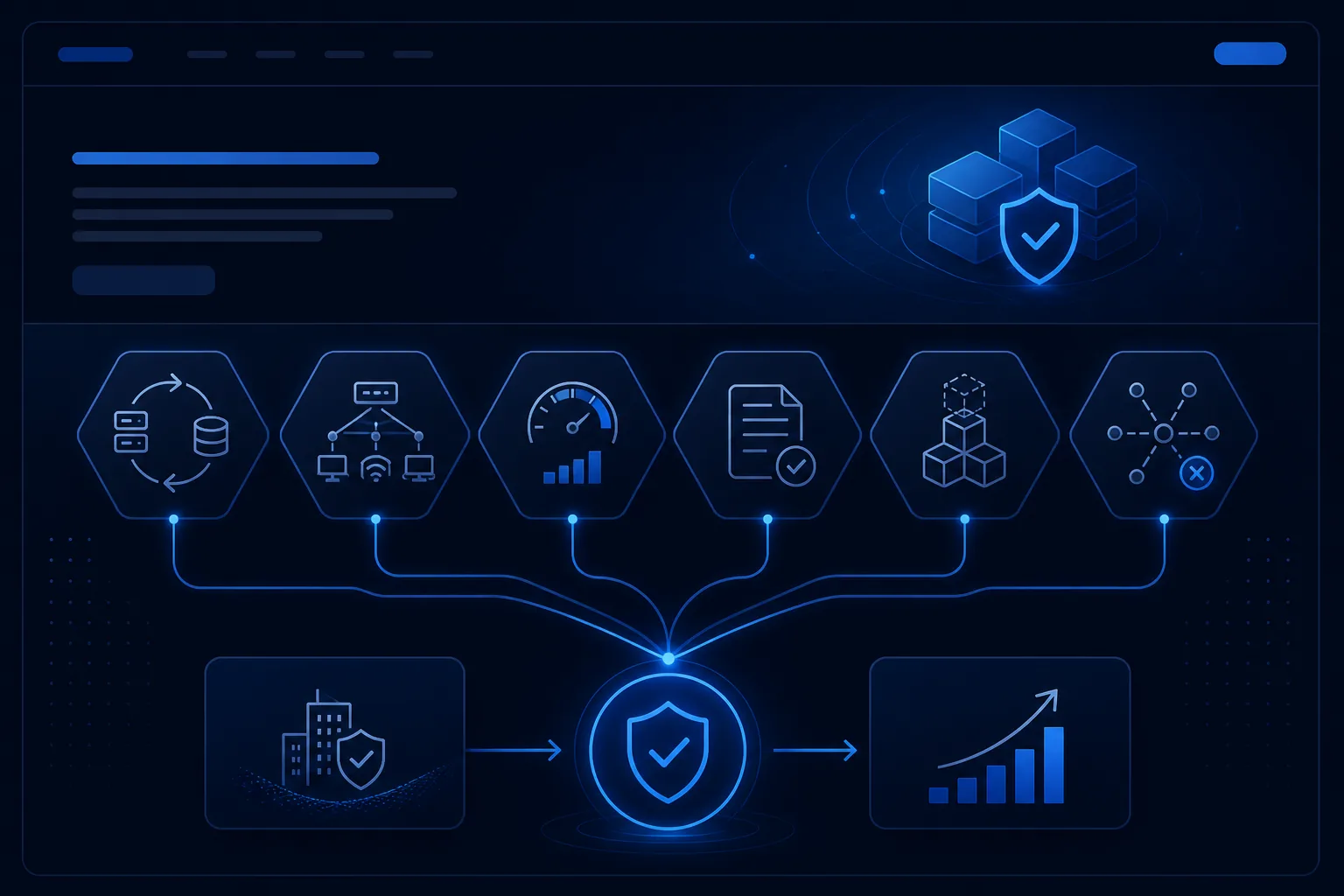
2. Network checklist
Check that:
- core network design is documented and understandable
- redundancy exists where continuity depends on it
- segmentation is appropriate for operational and security needs
- bottlenecks are known before growth exposes them
- connectivity dependencies on ISPs, sites, or vendors are visible
Network quality matters because it shapes how well the rest of the environment performs and recovers. Weak answers here often indicate hidden single points of failure, thin redundancy, or design assumptions that made sense for a smaller business but no longer provide enough margin.
3. Capacity and performance checklist
Validate whether:
- compute, storage, and network capacity are measured against business growth
- recurring performance issues are being treated as signals, not annoyances
- key systems have room to scale
- major infrastructure constraints are visible to leadership before project planning begins
Recurring performance problems are often treated as nuisances when they are really early warning signs. A mature environment does not wait for visible disruption before recognizing that capacity strain, compute contention, or storage growth deserves attention.
4. Documentation checklist
Confirm that:
- asset inventories are current
- network and system diagrams exist and are usable
- credentials and administrative processes are handled securely
- runbooks or operational procedures exist for important systems
- the environment could be supported if one key person were unavailable
Documentation is what turns infrastructure from a collection of moving parts into a supportable business system. Strong answers here mean the business could explain the environment, recover it, and transfer support responsibility without starting from memory alone.

5. Technical debt checklist
Review whether:
- unsupported systems remain in service
- temporary workarounds have become permanent dependencies
- fragile integrations are known and tracked
- modernization priorities are documented but repeatedly deferred
Technical debt becomes risky when it is no longer just inconvenient. Deferred modernization, unsupported systems, and accumulated workarounds can all reduce resilience, slow change, and increase the cost of the next failure. This section is meant to reveal whether the environment is still supportable on purpose or merely supportable by habit.
What strong and weak answers usually indicate
Strong answers usually show that the environment is being managed with visibility into supportability, growth, and recovery.
Weak answers usually indicate that infrastructure risk is being discovered reactively. That often means the business is learning about fragility only when performance, support, or continuity problems make it impossible to ignore.
Why the evidence matters
Uptime Institute found in 2024 that 54% of respondents said their most recent significant outage cost more than $100,000.
That matters because infrastructure gaps often look tolerable until the business feels the operational and financial cost of failure directly.
The same analysis found that 80% believed their most recent serious outage could have been prevented with better management, processes, and configuration.
That reinforces the purpose of this checklist: supportability, documentation, redundancy, and lifecycle discipline are not administrative details. They influence whether the next disruption is manageable or expensive.
The evidence supports a simple conclusion: infrastructure maturity is not just about keeping systems running today. It is about reducing the likelihood that preventable weakness turns into avoidable business interruption tomorrow.
Frequently asked questions
Final takeaway
Infrastructure risk often grows in environments that appear stable day to day. This checklist helps surface the weaknesses that typically stay hidden until growth, change, or failure puts them under stress.

Move from self-review to a structured IT Infrastructure Risk Assessment.
If this checklist reveals more fragility than expected, move from self-review to a structured IT Infrastructure Risk Assessment.