
Technology Risk Assessment for Law Firms
Published:
A technology risk assessment for law firms should evaluate confidentiality, access control, recovery readiness, document-system dependency, governance discipline, vendor risk, and operational resilience in the context of legal practice.
Law firms do not experience technology risk as an abstract IT issue. They experience it through client confidentiality, access to case information, trust obligations, remote work, continuity of practice, and the reputational cost of preventable control failure.
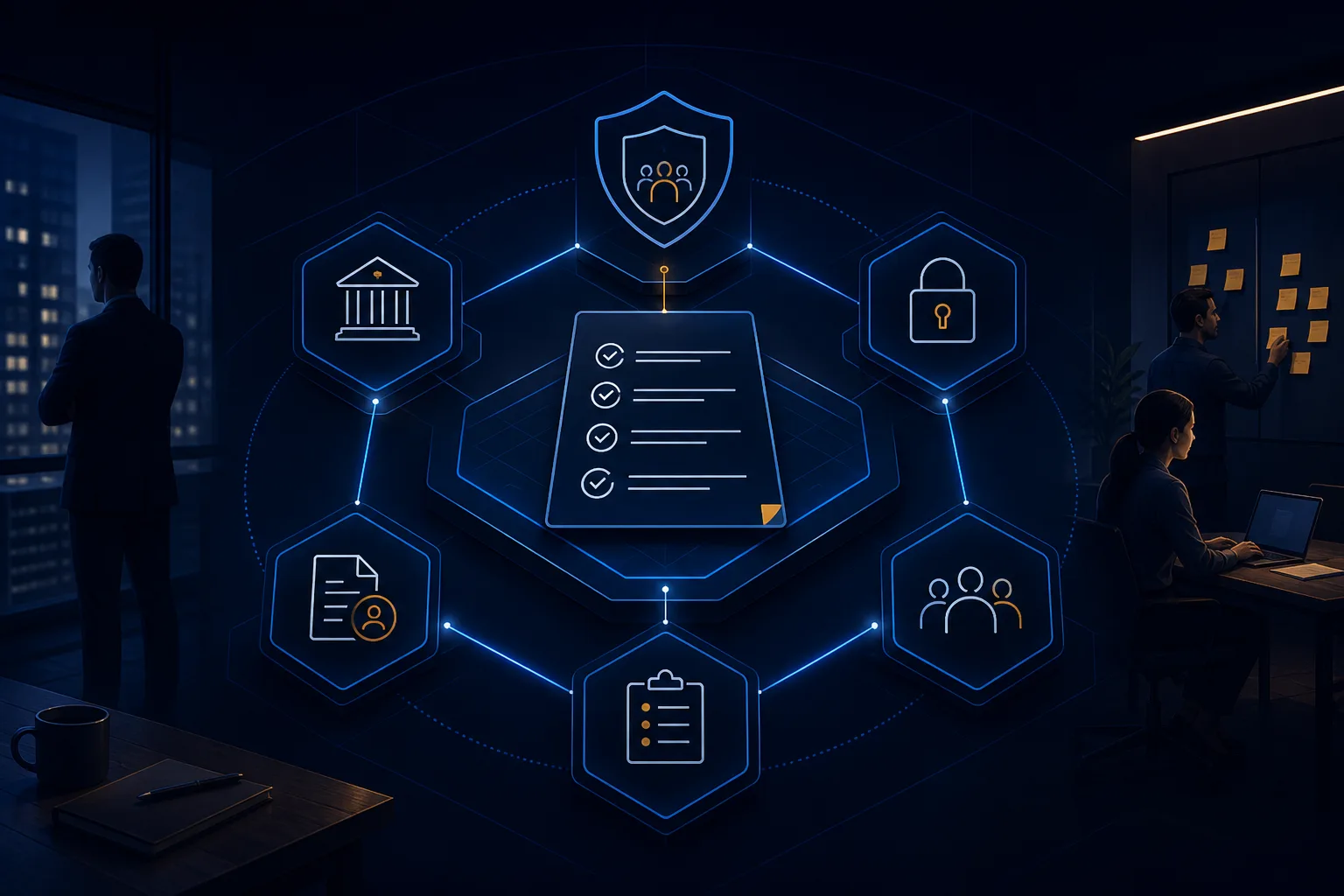
The Office of the Privacy Commissioner of Canada says organizations must report certain breaches that create a real risk of significant harm, and failures to meet those breach-reporting obligations can lead to fines of up to $100,000 under PIPEDA. The Law Society of Ontario also states that lawyers must protect and hold in strict confidence all information concerning a client’s business and affairs. Those obligations are why legal-sector technology risk has to be framed in confidentiality, continuity, and governance terms rather than as generic IT housekeeping.
Why law firms need a broader view of risk
Cybersecurity matters deeply in legal practice, but it is not the only risk that matters.
Firms also depend on:
- document management and file availability
- continuity of access to email, collaboration, and practice systems
- clear governance over vendors and external access
- resilient recovery of case files and client communications
- disciplined handling of permissions as teams, matters, and tools evolve
That is why law firms benefit from a broader technology-risk model rather than a narrow control checklist alone.
Legal practices often discover this only when pressure rises. A client asks stronger assurance questions. A remote-work pattern exposes permissions drift. A vendor becomes more central to document access than anyone intended. A recovery discussion reveals that file availability and communication continuity depend on assumptions that were never tested. Those are not isolated IT issues. They are practice-risk issues expressed through systems.

How the six pillars apply to legal operations
Infrastructure
The systems supporting document access, office operations, and remote work must be stable, supportable, and recoverable.
Cybersecurity
Identity, email, endpoint, and access controls matter because they protect sensitive client information and reduce the likelihood of compromise.
Resilience
Backup and recovery matter because case materials, communications, and operational continuity cannot depend on assumption.
Cloud
Microsoft 365 and legal SaaS tools create efficiency, but they also create sharing, permission, and vendor exposure that must be governed carefully.
Governance
Ownership, policy, change control, and vendor accountability help the firm make defensible decisions rather than relying on informal habits.
AI readiness
As firms explore Copilot or legal AI tools, permissions hygiene, data handling, and governance discipline become even more important.
This six-pillar view matters because legal exposure is rarely single-domain. A confidentiality concern can also be a cloud-governance issue. A resilience problem can also become a client-service issue. A permissions mistake can turn into both a cybersecurity and professional-responsibility question. A broader assessment helps the firm see those overlaps clearly.

Common legal-sector warning signs
A firm likely needs a broader assessment when:
- client or matter information is difficult to govern consistently
- document recovery confidence is low
- remote access and collaboration expanded faster than oversight
- MSP support exists but leadership lacks an independent risk view
- compliance, privacy, or client-assurance expectations are increasing
Consider a generic 40-person law firm with hybrid work, Microsoft 365 collaboration, document-management dependence, and a mix of internal habits plus outside IT support. Day-to-day operations may look stable. But if permissions have drifted, recovery assumptions are thin, and vendor or governance decisions remain informal, the firm may be carrying more confidentiality and continuity risk than partners realize.
What leadership should be able to ask
In a mature legal environment, leadership should be able to ask and answer questions such as:
- if access to matter data was disrupted, what would be restored first and how quickly
- who owns document-system risk, vendor risk, and confidentiality-related technology decisions
- whether remote access and external sharing still reflect current client expectations
- how much operational knowledge is concentrated in one provider or one staff member
- whether planned AI adoption is being governed with enough discipline
Those questions help shift the conversation from generic cybersecurity language into practical legal-operating reality.
What the evidence means for law firms
The Office of the Privacy Commissioner of Canada says organizations must report certain breaches that create a real risk of significant harm, and failures to report can lead to fines of up to $100,000 under PIPEDA.
That matters because privacy and breach obligations can create direct consequences when confidentiality or governance breaks down.
The Law Society of Ontario says lawyers must protect and hold in strict confidence all information concerning a client’s business and affairs.
That reinforces why legal-sector technology risk should be evaluated in terms of client trust and professional duty, not only generic IT efficiency.
Statistics Canada reported that 16% of Canadian businesses were impacted by cybersecurity incidents in 2023.
That broader business context helps show why legal practices cannot assume their sector is insulated from the operational and governance consequences of technology failure.
Together, these sources support a simple conclusion: legal-sector technology risk is not merely an IT concern. It is a confidentiality, continuity, and accountability issue that leadership should be able to explain and govern clearly.
Frequently asked questions
Final takeaway
Technology risk in a law firm is really a client-trust, continuity, confidentiality, and governance issue expressed through systems.

Start with a Technology Risk Assessment built for legal operations.
If your firm depends on digital systems for confidentiality, continuity, and client trust, start with a Technology Risk Assessment built for serious legal operations.