AI usage visibility
Assess where AI tools are actually being used across teams and workflows, including usage that has never been formally approved.
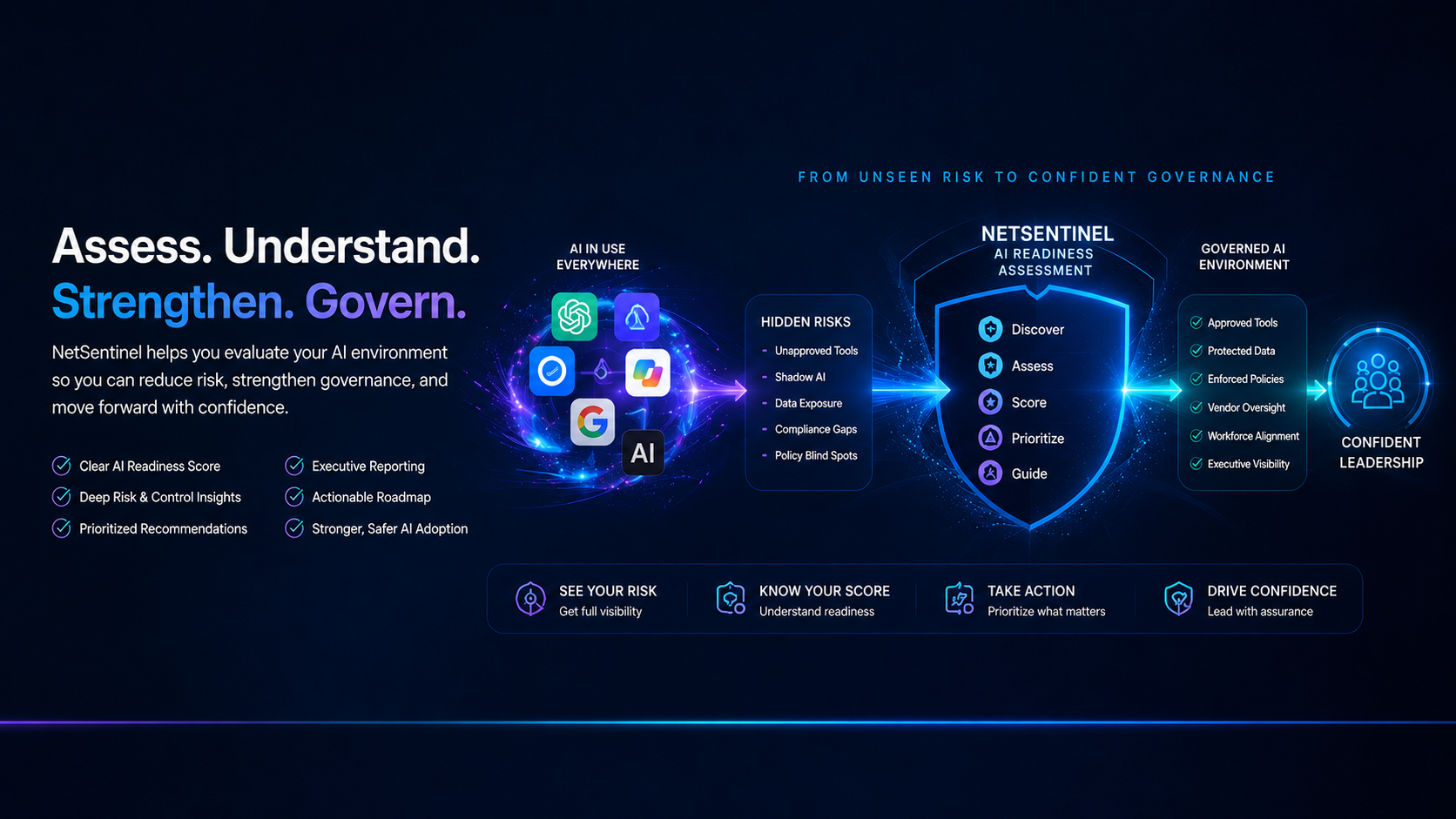
NetSentinel delivers the AI governance visibility your business needs to adopt AI confidently and stay ahead of risk.
AI adoption usually starts before governance does. This service closes that gap with visibility, priority, ownership, and practical next steps.
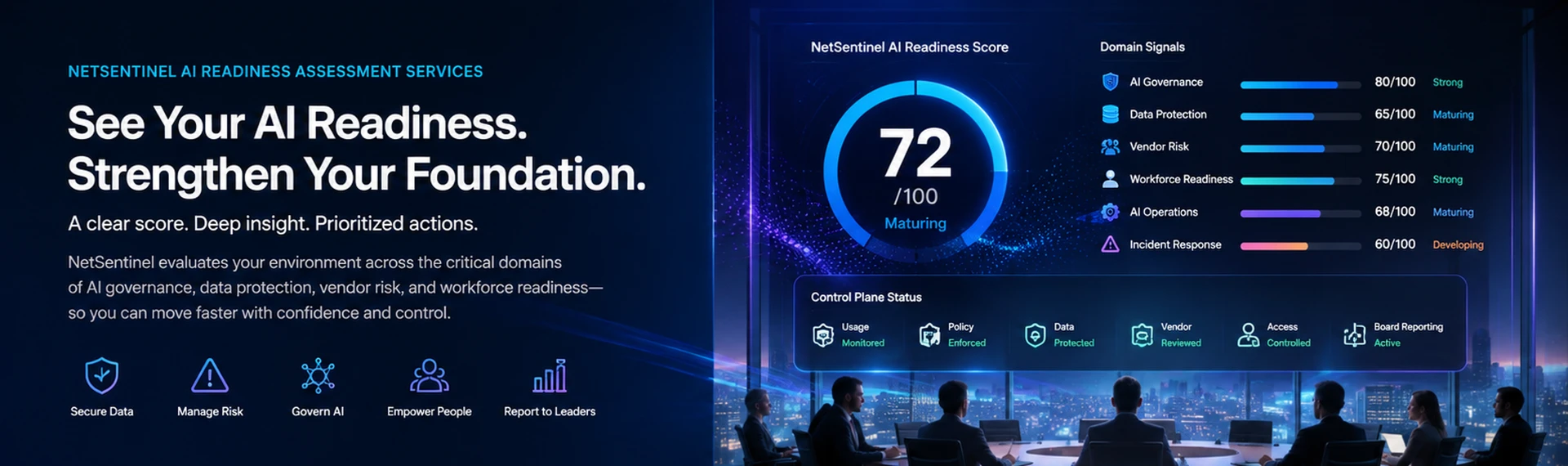
The question leadership needs answered is not “is AI useful”. It is “what are we already exposed to, and who owns it”.
This service produces a structured, defensible answer that supports policy, approvals, vendor decisions, and board conversation.
For the full landing overview, see the AI readiness & governance assessment. For the wider risk picture, see technology risk assessment services.
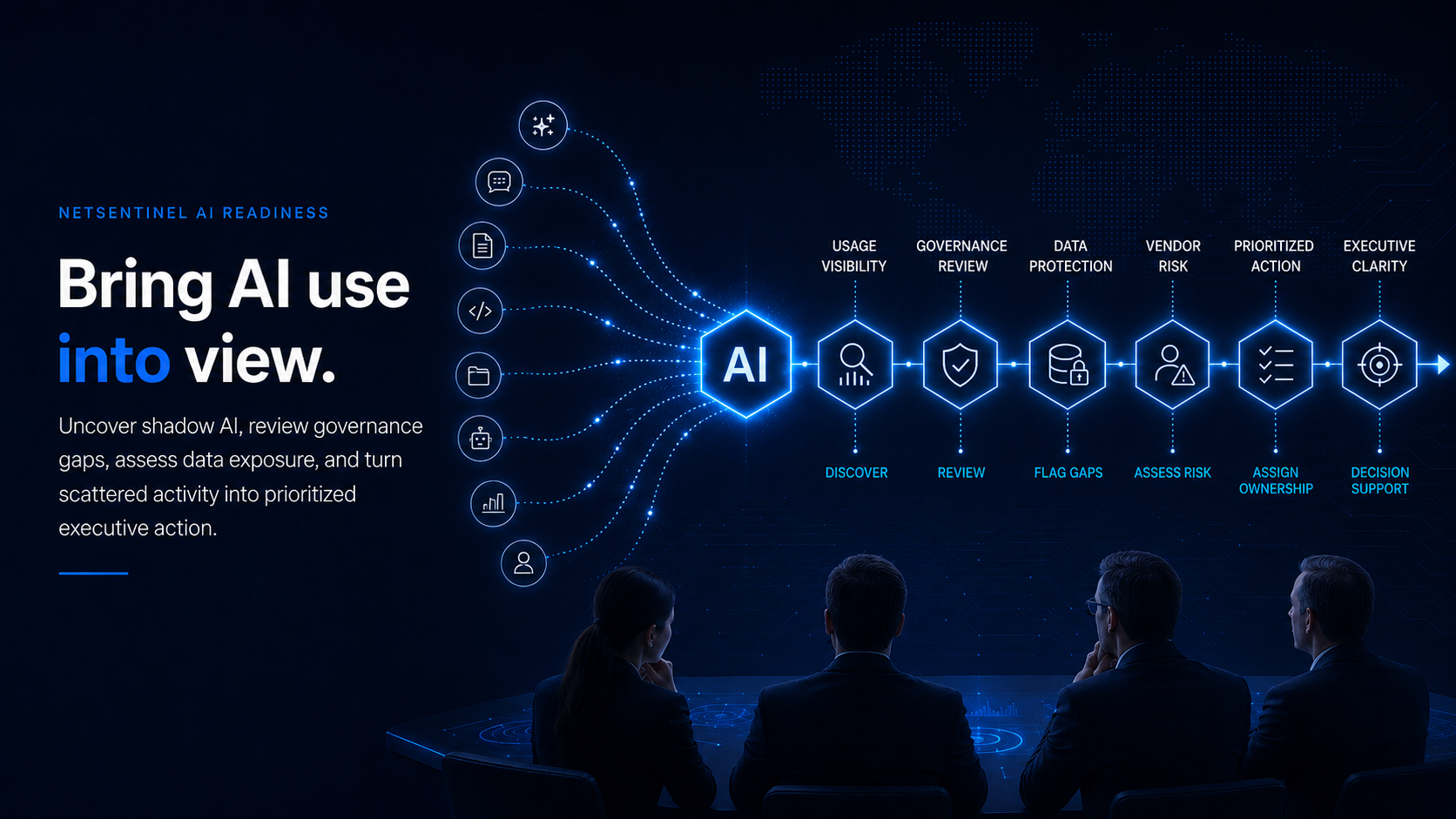
It helps leadership understand:
This service suits organizations where AI usage is moving faster than governance.
It is a strong fit for:
Each domain is assessed on its own, then read together so leadership sees where governance is weakest relative to actual usage.
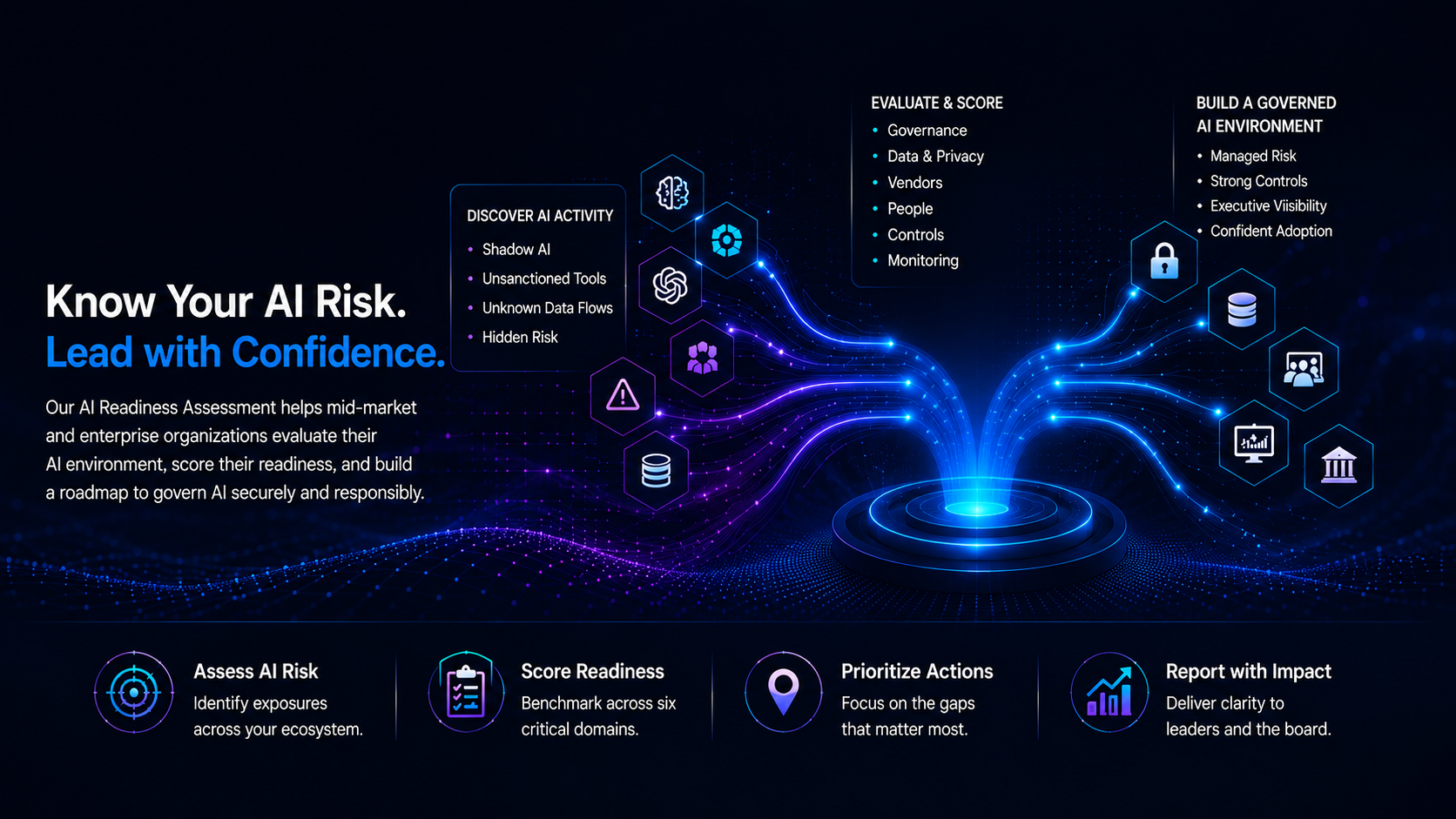
Assess where AI tools are actually being used across teams and workflows, including usage that has never been formally approved.
Assess acceptable-use policy, approval paths, exceptions, ownership, and review discipline against how AI is really being adopted.
Assess where business, client, or regulated data may be entering AI systems, and whether classification and handling rules exist.
Assess AI vendors, contractual terms, data handling commitments, and concentration risk in the platforms the business depends on.
Assess whether processes, accountability, escalation, and quality control are ready for AI to be used in real work.
Assess whether permissions, identity design, and integrations control what AI systems can reach inside the environment.
Assess whether leadership receives a consistent, usable view of AI usage, risk, and accountability over time.
Output written for decision-makers, not for a model evaluation team.
Depending on scope, the engagement supports:
Raw findings → executive outputs → a decision leadership can defend
Understand what the business wants from AI, what is already happening, and where leadership feels uncertain.
Work through usage visibility, governance, data exposure, vendor risk, operations, access, and oversight.
Turn scattered AI activity into consequence, priority, ownership, and a defensible position for leadership.
Use the outputs for policy work, approval design, vendor review, or a deliberate pause on expansion.
This is an assessment and governance decision-support engagement. It is not an AI build or managed service.
NetSentinel is the executive layer above IT. For AI, that means showing where usage, data, and vendors create risk, and what leadership should govern first.
NetSentinel does not:
By the time leadership starts asking questions, AI use is often widespread and undocumented.
The practical consequences:
Use model evaluation when the goal is testing accuracy, bias, or behavior of a specific model.
Use counsel when the goal is a formal opinion on regulation, contracts, or liability.
Use an implementation partner when the goal is building, integrating, or operating AI systems.
Use NetSentinel when the goal is executive visibility into AI risk, governance maturity, ownership, and safe next steps.
Related reading: cybersecurity risk assessment services, the six-pillar framework, and engagement pricing.
If leadership needs a clear view of AI usage, data exposure, and governance maturity, this is where the conversation should start.